
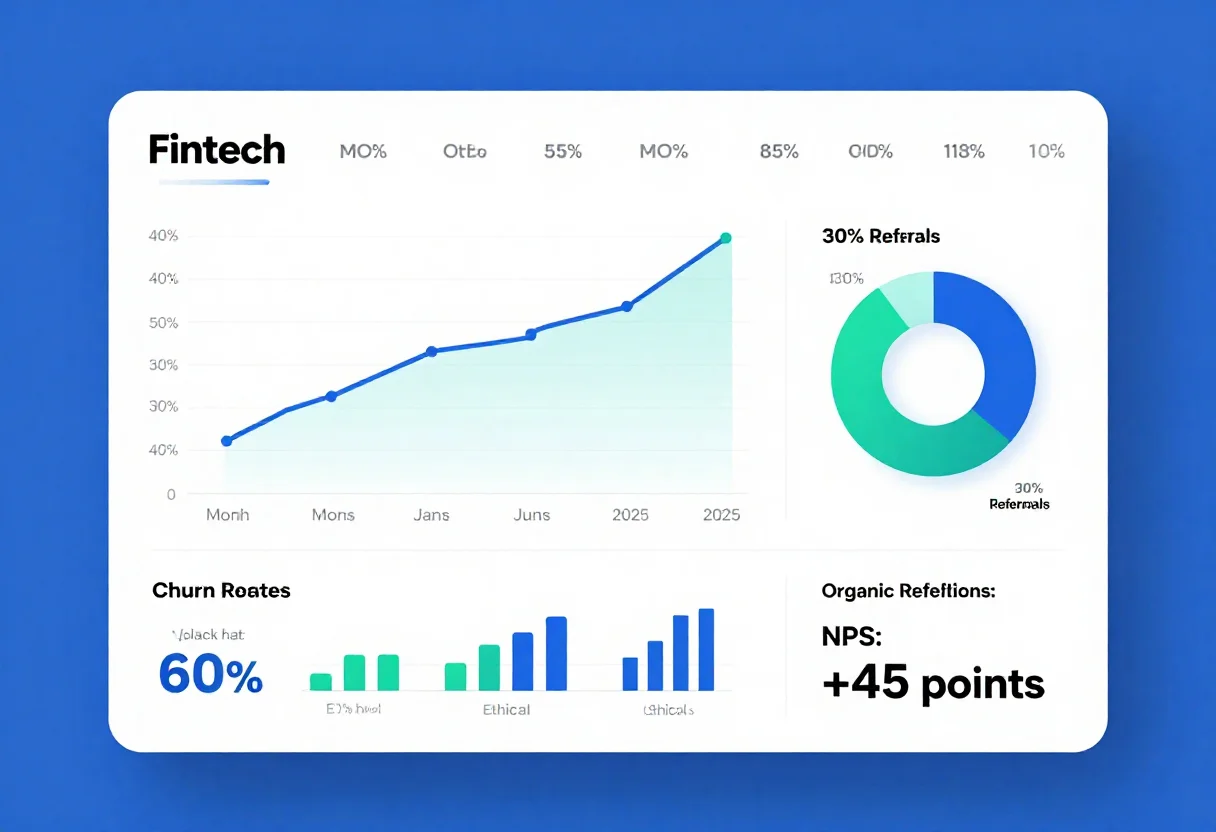
A few years ago, after consulting for a fintech startup that was desperate to hit their series A targets. They were using what many in the industry call “black hat” tactics – hidden subscription checkboxes and making it nearly impossible for users to find the “delete account” button. On paper, their growth looked incredible. Their acquisition numbers were spiking. But underneath the surface, the business was rotting. Their churn rate was over 60%, and their brand reputation in online forums was toxic. One thing missing was: Ethical Growth Hacking, which is usually the case in most businesses today.
We stepped in to pivot their strategy toward ethical growth hacking. We removed the friction, became radically transparent about pricing, and focused on helping users actually solve their financial problems. Within six months, their organic referrals tripled. They didn’t just grow; they became a company that people actually liked using.
In the current market, the “growth at all costs” mindset is failing. Founders are realizing that aggressive shortcuts lead to high churn and platform bans. Ethical growth hacking is the alternative. It is the practice of using data, psychology, and rapid experimentation to scale a business while maintaining total transparency and respect for the user.

If you want to build a company that lasts until 2030 and beyond, you must master ethical growth hacking. It is not about doing less marketing. It is about engineering a better product experience so that growth becomes a natural byproduct of user success. This guide will show you exactly how to apply ethical growth hacking to your startup.
Defining Ethical Growth Hacking: Growth with a Conscience
To understand ethical growth hacking, we first have to define what it is not. Traditional growth hacking often focuses on finding loopholes in systems – like the famous early Airbnb integration with Craigslist. While clever, many modern “hacks” have crossed the line into manipulation. Ethical growth hacking shifts the focus from “how can we trick the system?” to “how can we provide so much value that the system rewards us?”
The core philosophy of ethical growth hacking is built on three pillars:
- Sustainable Scale: We do not want spikes that vanish next month. We want compounding growth.
- User Agency: Every user should feel in control of their journey. No dark patterns or forced continuity.
- Data Integrity: Using data to improve the user experience, not to exploit behavioral vulnerabilities.
When a founder chooses ethical growth hacking, they are investing in the long-term health of their brand. In a world where privacy laws like GDPR and CCPA are the standard, ethical growth hacking is the only way to remain compliant while remaining competitive. You are building a “trust moat” that competitors using shady tactics simply cannot replicate.
How to Apply Ethical Growth Hacking to the Pirate Funnel
The AARRR framework (Acquisition, Activation, Retention, Referral, Revenue) is the backbone of any growth lead’s strategy. However, to make it work in 2026, we must look at it through the lens of ethical growth hacking.
Acquisition: Quality Over Quantity
In ethical growth hacking, acquisition is not about buying every click possible. It is about finding the right users who actually have the problem your product solves. Instead of interruptive ads, ethical growth hacking leans heavily into content-led growth and semantic SEO. You provide the answers your customers are searching for, positioning yourself as an authority before you ever ask for a credit card.
Activation: The Honest “Aha!” Moment
Activation is the moment a user realizes the value of your product. Ethical growth hacking focuses on reducing “Time to Value” (TTV). If your product is a project management tool, the activation isn’t “signing up” – it is “creating the first task.” An ethical growth hacking approach involves a transparent onboarding process that shows the user exactly how to get results without using “forced tours” that users just click through to skip.
Retention: The Heart of Ethical Growth Hacking
Retention is where ethical growth hacking shines. It is much cheaper to keep a customer than to find a new one. By using behavioral analytics, you can see where users get stuck and proactively reach out to help. This isn’t about “re-engagement” spam; it is about genuine customer success. If a user isn’t using the product, an ethical growth hacking strategy might even involve suggesting they downgrade their plan to save money until they are ready to use the full features. This builds incredible loyalty.
Referral: Incentives Without Bribery
We all know the Dropbox referral model. It worked because it was a win – win. Ethical growth hacking uses referral loops that reward both the sender and the receiver. However, it avoids “spamming” the user’s contact list. You want referrals to be a conscious choice made by a happy user, not an accidental click.
Revenue: Transparent Pricing Models
Finally, revenue. Ethical growth hacking avoids “hidden fees” or “introductory rates” that skyrocket after a month without warning. By being clear about your pricing and making it easy to cancel, you actually reduce payment friction. Users are more likely to subscribe when they know they aren’t being trapped.
The 5 Pillars of Ethical Growth Hacking
To implement ethical growth hacking effectively, you need a structured approach. These five pillars represent the most successful strategies I have seen for startups.
1. Product-Led Growth (PLG)
Product-led growth is the ultimate form of ethical growth hacking. It means the product grows itself because the value is inherent in the usage. Think of Slack or Calendly. You use the product, and in doing so, you expose others to it. There is no “hard sell.” The product is the marketing.
2. Conversion Rate Optimization (CRO) with Empathy
Most people think CRO is about changing button colors. In ethical growth hacking, CRO is about removing anxiety and friction. We use A/B testing to see which messaging makes the user feel more confident. We use heatmaps to see where users are confused and then simplify the interface. This is ethical growth hacking in action – improving the experience to improve the numbers.
3. Engineering as Marketing
This is a powerful ethical growth hacking tactic. Instead of a whitepaper, you build a free tool. For example, a mortgage startup might build a highly accurate, free calculator. This tool provides immediate value to the user and establishes your authority. You are “hacking” growth by being genuinely useful.
4. Community-Led Growth
Building a community around your product is a long-term ethical growth hacking play. When users talk to each other, they solve each other’s problems and brainstorm new ways to use your tool. This reduces your support costs and increases retention.
5. Semantic SEO and Topic Authority
In 2026, search engines prioritize expertise. Ethical growth hacking involves creating “pillar pages” (like this one) that cover a topic in-depth. By providing high-authority, data-backed insights, you earn the trust of both Google and your potential customers.
Proof that Ethical Growth Hacking Outperforms Unclear Tactics
We don’t have to look far to see ethical growth hacking success stories.
Canva is a prime example. They didn’t grow by using aggressive ads. They grew by creating thousands of templates that ranked for “how to make a flyer” or “resume builder.” This is “Template-Led Growth,” a core ethical growth hacking strategy. They gave users a way to succeed for free, and millions of those users eventually upgraded to the pro version.
Buffer is another legendary case. They pioneered “Radical Transparency.” They shared their revenue, their salaries, and even their diversity statistics publicly. This built a level of trust that no amount of traditional advertising could buy. Their ethical growth hacking was their honesty. It made people want to support them.
Notion used community-led growth. They empowered their power users to create and sell their own templates. By allowing their ecosystem to profit alongside them, they created a viral loop that was entirely ethical and incredibly powerful.
Building Your Ethical Growth Hacking Toolkit
You cannot manage what you do not measure. To succeed with ethical growth hacking, you need a tech stack that respects user privacy while providing deep insights.
- Analytics: Use tools like PostHog or Mixpanel. These allow you to track user journeys and see where “friction” occurs without compromising individual privacy.
- A/B Testing: Tools like VWO or Optimizely are essential for the experimentation phase of ethical growth hacking.
- Customer Feedback: Use Hotjar to see recordings of how users actually move through your site. Often, an “ethical hack” is as simple as moving a confusing menu item.
- Communication: Customer.io or Intercom allow you to send behavior-based messages that help the user, rather than just shouting at them to “buy now.”
Conclusion: Why Ethical Growth Hacking is the Only Defensible Moat
The era of the “quick fix” is over. As a founder, your greatest asset is the trust of your market. Ethical growth hacking allows you to scale quickly without burning bridges. It forces you to build a better product, which is the only true way to win in the long run.
When you focus on ethical growth hacking, you aren’t just looking for a loophole in an algorithm. You are building a system that rewards value, rewards honesty, and rewards the user. That is a competitive advantage that no “black hat” competitor can ever take away from you.
Start your journey toward ethical growth hacking today by auditing your current funnel. Ask yourself: “Is there any part of this process where a user might feel tricked?” If the answer is yes, fix it. That is your first step toward sustainable, 10X growth.
I need you to take one step further today. Sign up for GROWTH INSIDER NEWSLETTER where we publish data backed insights into Growth for Founders like you.
Frequently Asked Question
Is ethical growth hacking slower than traditional growth hacking?
Not necessarily. While it takes more time to build the foundation (like high-quality content or a free tool), the growth is compounding. Traditional hacks often result in a “spike and crash” pattern. Ethical growth hacking creates a steady upward trajectory because your retention is significantly higher.
What is the biggest difference between a growth hack and an ethical growth hack?
The difference is intent. A traditional hack often tries to bypass user intent (e.g., “confirmshaming” where the “no” button says “No, I like being poor”). An ethical growth hacking strategy aligns with user intent, helping them get where they want to go faster.
Can I use A/B testing in ethical growth hacking?
Yes, it is encouraged. The ethical boundary is how you use the results. If you find that a red button “tricks” people into clicking something they didn’t want, you don’t use it. If you find that a clearer headline helps people understand your value proposition better, that is a successful ethical growth hacking experiment.
How do I measure the success of an ethical growth hacking campaign?
Beyond just “signups,” look at Net Promoter Score (NPS), Customer Lifetime Value (LTV), and Organic Referral Rate. These metrics tell you if your growth is healthy or if you are just filling a leaky bucket.
Is SEO considered part of ethical growth hacking?
Absolutely. Specifically, semantic SEO. By creating content that answers complex user questions, you are using the search engine’s goal (to provide the best answer) to grow your business. This is the definition of a “win-win” ethical growth hacking tactic.
References and Further Reading:
- The Hacking Growth Method by Sean Ellis – The foundational text on high-velocity testing.
- Bain & Company on the Value of Retention – Data-backed insights on why retention is the engine of growth.
- GDPR Official Guidelines – Understanding the legal framework for data-driven growth.